
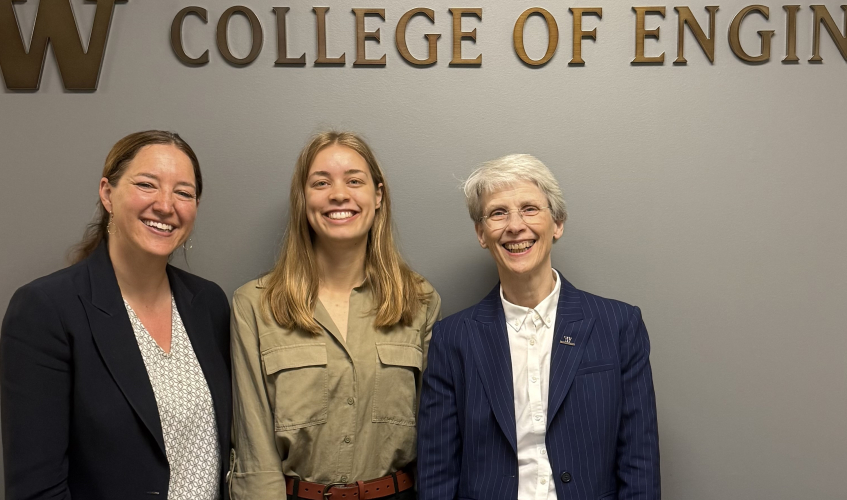
From left, Elizabeth Nance, Sofia Dahlgren and Nancy Allbritton, dean of the College of Engineering, at a celebration for the Dean's Medal Winners.
Sofia Dahlgren, a graduating senior in the Nance Lab, has been awarded the Dean’s Medal for Academic Excellence from the College of Engineering.
Presented by Dean Nancy Allbritton, the Dean’s Medal recognizes two graduating students who demonstrate outstanding academic achievement, meaningful research and internship experiences, and overall curricular rigor. Athena Ortega, a senior in the Department of Human Centered Design & Engineering, was awarded the Dean's Medal for Leadership & Engagement.
Dahlgren’s nomination focused largely on her research investigating treatments for amyotrophic lateral sclerosis (ALS), or Lou Gehrig’s disease, which is a rare and fatal neurodegenerative condition. Currently, there is no cure for ALS.
Dahlgren’s research experience started when she joined the Nance Lab in her first year of undergrad — before she had even declared a ChemE major.
“Mentorship from the ChemE department started before day one,” Dahlgren says, adding that Professor Elizabeth Nance was particularly supportive of her growth. “As I progressed in research, Professor Nance continued to challenge me and foster my independence,” she says. “The support Professor Nance gave me to manage a high-level project with international collaborators as an undergraduate is rare.”
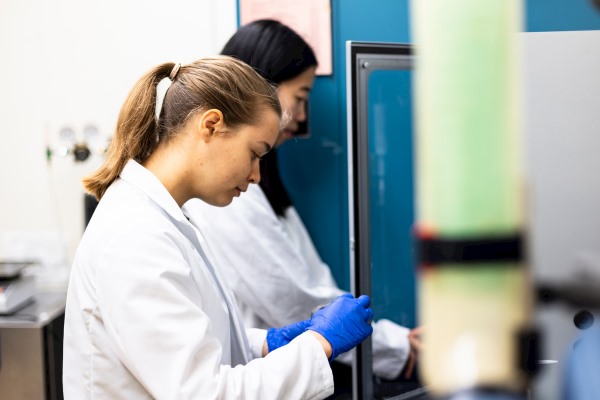
Dahlgren, front, works alongside Ph.D. Candidate Ruby Jin in the Nance Lab.
Dahlgren developed a method of encapsulating an anti-inflammatory drug for ALS, with the goal of delivering it directly to disease-mediating cells in the brain. Targeting these cells makes the treatment more effective and minimizes negative side effects.
“There are lots of drugs out there with interesting therapeutic properties but that fail to translate clinically for one or more reasons,” Dahlgren says. “Nanoparticles allow us to take those drugs and optimize for delivery and safety, turning them into viable therapeutics.”
There aren’t many undergraduate students who are prepared to take on an independent project after less than one year in the lab or co-lead a collaboration with doctoral-level researchers at the University of Queensland in the year after. But Dahlgren’s distinctive traits and experiences meant she was “well positioned to be successful in carrying out a high-risk, innovative and high-reward project,” Nance wrote in her letter supporting Dahlgren’s nomination for the Dean’s Medal of Academic Excellence.
“Sofia is curious, proactive, and reflective, a unique combination that means everything she does is done with high integrity,” Nance, who is also chair of the department, wrote. “Her capacity for leadership in this space showcases her ability to work across cultures, training levels, and tackle complex problems that could have positive life-changing effects for many suffering from neurological conditions, globally. In short, Sofia is one of the most outstanding students I have seen come through our degree program and the College of Engineering.”
In recognition of the complexity and caliber of her research, Dahlgren has received several national awards, including from the Barry Goldwater Scholarship and Excellence in Education Foundation, the Astronaut Scholarship Foundation, and the National Science Foundation.
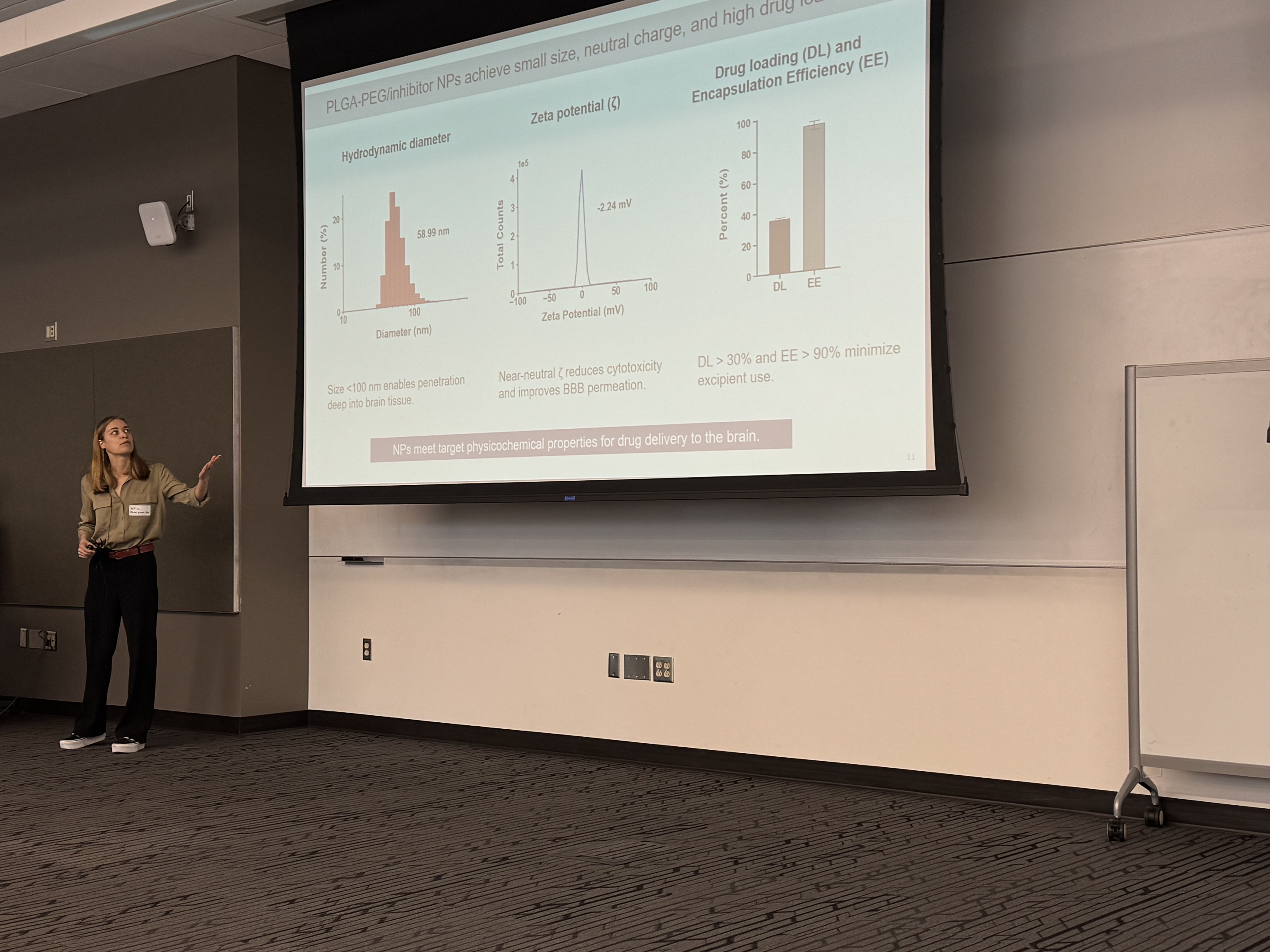
Dahlgren presents her research at the American Institute of Chemical Engineers Regional Conference in April. Her presentation won first place.
The ChemE Department has also supported Dahlgren’s education and professional growth, she says. Departmental scholarships allowed her to focus on her academics and research. Travel funding from the UW chapter of the American Institute of Chemical Engineers supported her technical presentation at the Pacific Northwest Regional Conference, where she won first place. Access to the Bindra Innovation Lab, where any ChemE undergraduate can be trained to use the specialized equipment, also supported her research.
Balancing lab work with excellence in the classroom, Dahlgren thrived in the rigorous ChemE curriculum. Her ChemE student cohort played a significant role in this academic success. “Being surrounded by strong peers who pushed me intellectually and formed a collaborative community made the long hours fun,” she says.
Dahlgren has given back to this community, too, by representing the college at fairs and outreach events, and by serving as a Culture and Science Exchange mentor for middle school students. She is also a go-to mentor for her peers throughout engineering. “Her ability to connect with others and inspire them, support them, or guide them through their scientific journey has lifelong impacts on the many individuals she interacts with,” Nance writes.
Dahlgren was actively recruited by prestigious graduate programs, including MIT and Stanford. She will begin her PhD at Duke University this fall, joining Dr. Daniel Reker’s lab in active machine learning and molecular medicine. Her graduate research will integrate her drug delivery background from the Nance Lab with skills she developed in her industry capstone project and data science minor.
“I aim to develop computational approaches that help optimize data-scarce parts of the drug development pipeline, such as formulation,” Dahlgren says. “I hope these methods will accelerate our ability to make new treatments for complex and overlooked diseases.”
Originally published May 28, 2026