The Department of Chemical Engineering’s Unit Operations Lab was renovated earlier this year, thanks in part to a generous donation from an estate.
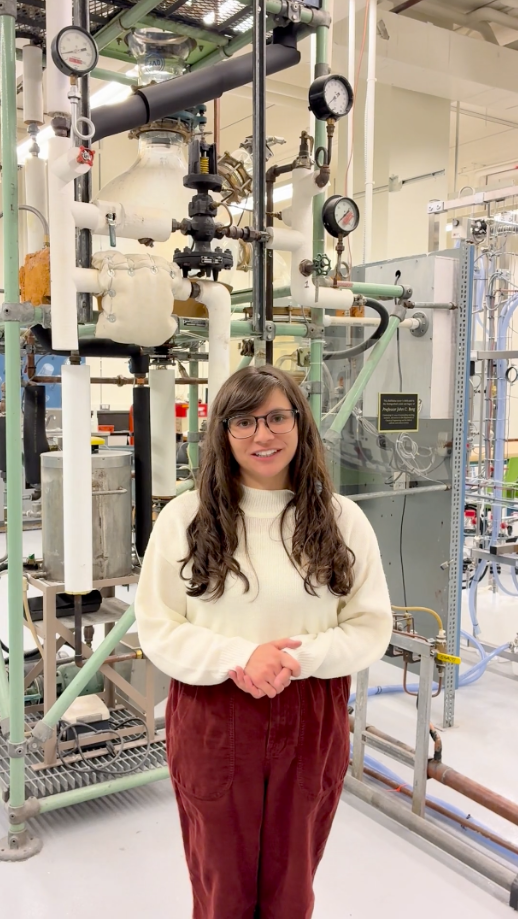
Alex Prybutok gives a tour of the Unit Operations Lab.
The Unit Operations Lab is where undergraduate students learn to use equipment (known as units) that is fundamental to chemical engineering.
“These teaching labs are one of the most critical components of ChemE undergraduate education,” Jorge Marchand, professor and a co-teacher of the Unit Operations Lab class, said. “They build a sense of ChemE identity, they reinforce the theory students are learning in their classes, and they help prepare students for industry.”
Yet for many years, the Unit Operations Lab in Benson Hall was not well equipped for teaching students. While the lab is one of the largest in the country based on its footprint, much of the equipment was dated or even broken. “In our evaluations, students consistently listed the Unit Operations Lab as a potential area of improvement for the department,” Alex Prybutok, assistant teaching professor and co-teacher alongside Marchand, said.
With funding from the College of Engineering and a donation from an estate, the Department replaced this old equipment with four new units – a tray distillation column, a continuous reactor, a gas-liquid absorption column and a reverse osmosis unit. Each piece of equipment matches the scale of equipment used in industry, and together they teach students a wide range of skills that are important for both technical understanding and future career preparedness.
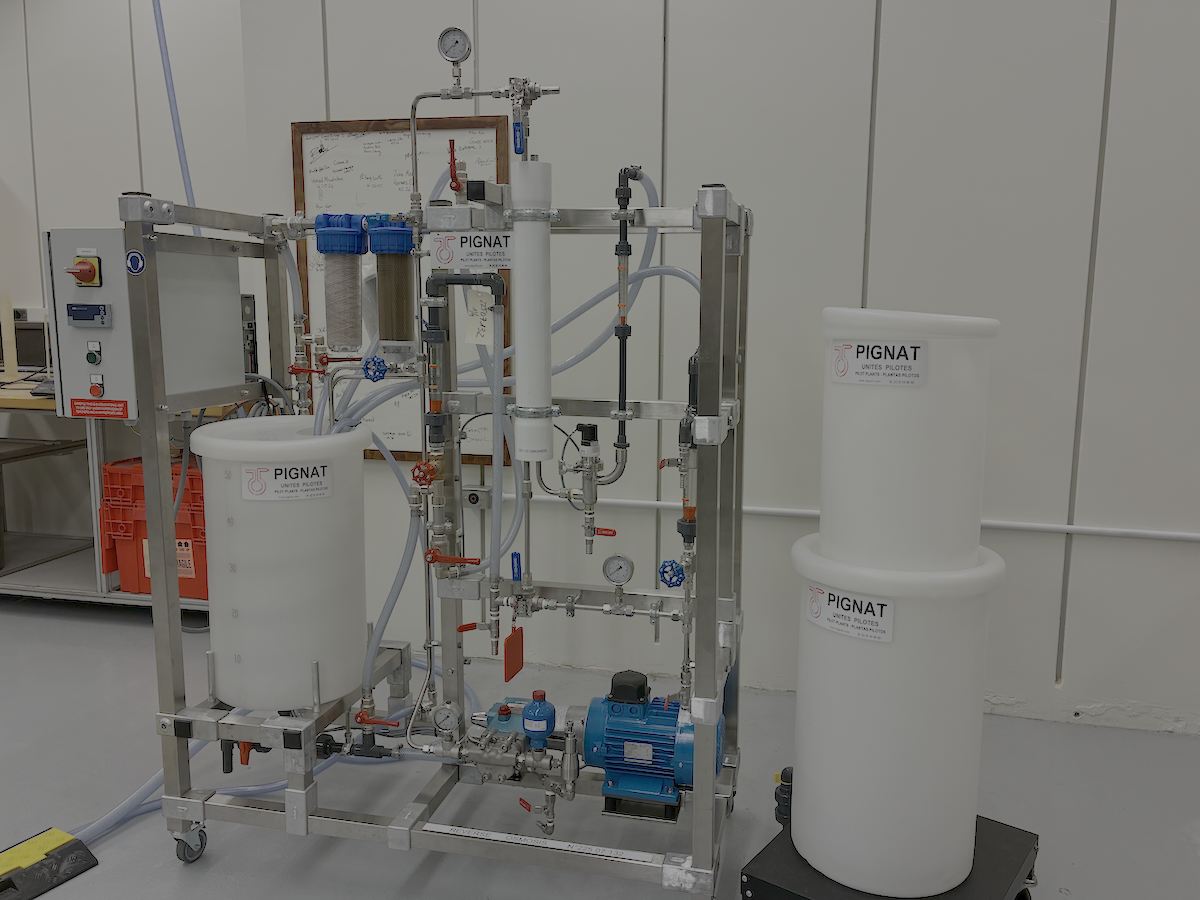
The lab has four new units. A reverse osmosis unit, pictured above, is a more modern piece of equipment particularly relevant to Seattle industries.
While most of the old equipment has been replaced, the distillation column built by Dr. John Berg remains to both honor Berg’s legacy and show students the scale of a larger distillation column.
In addition to replacing old equipment, the walls, ceilings and floors have been repainted. “The space is much more bright and inviting and functional now,” Prybutok said. “We’re really excited to have it.”
But the Department won’t stop with these improvements. The design of the new lab is purposefully flexible and modular, allowing the co-professors to adapt the units to meet industry demand and student interest. For example, in the future, the department plans to introduce a batch distillation unit like those used for distilling spirits.
“What I see now is this great potential for us to grow into a ChemE teaching center of excellence,” Marchand said. “We want to be a model by which other labs around the country, and even the world, operate.”
Originally published May 14, 2026