
Two ChemE faculty have been awarded a grant to incorporate robotics and artificial intelligence into the undergraduate curriculum.
Drs. Lilo Pozzo and Nada Naser were awarded a Supporting Educational Excellence and Discovery with AI (SEED-AI) Grant to update two advanced laboratory classes. The new curriculum will teach students how to use pipetting robots to more efficiently conduct experiments, and how to use artificial intelligence to analyze data. These classes are typically taken by students in their senior year.
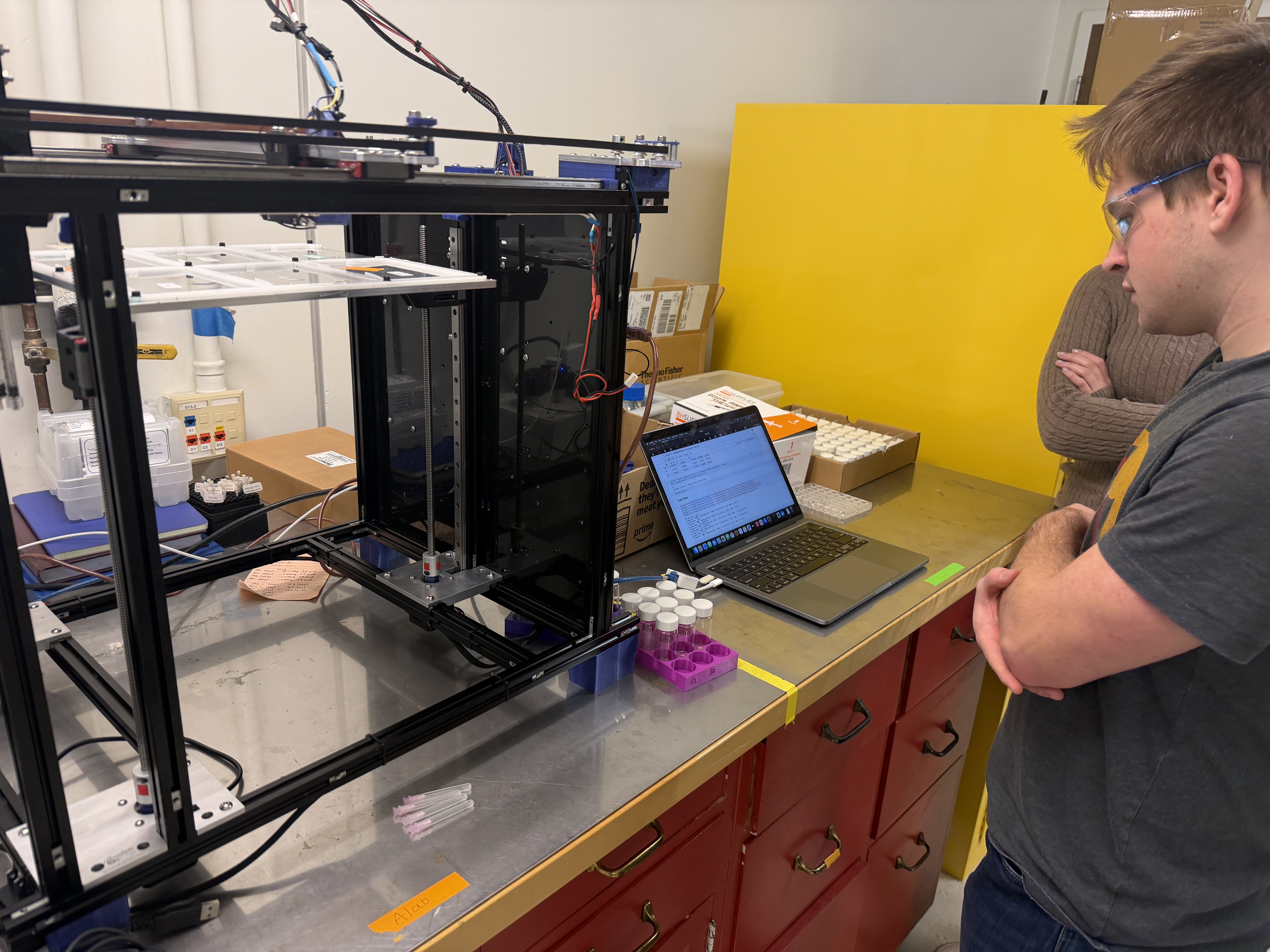
“The need for hands-on AI experience is acute,” Pozzo and Naser wrote in their grant application. “Employers increasingly expect graduates to be proficient in data-driven experimental methods, yet our laboratory curricula remain anchored in decades-old, one-sample-at-a-time protocols.”
In previous iterations of this class, students ran four conditions manually. Under the new curriculum, students will instead program a pipetting robot to run dozens of conditions simultaneously. They will use statistics to guide subsequent experiments and employ machine learning tools to analyze large datasets. This approach teaches the same core scientific principles while “equipping students with AI literacy and automation skills directly transferable to modern industrial and research settings,” Pozzo and Naser said. The introduction of modern, robotics-based laboratory equipment to these labs will transform the ChemE curriculum and better prepare students to work in industry labs after graduating.
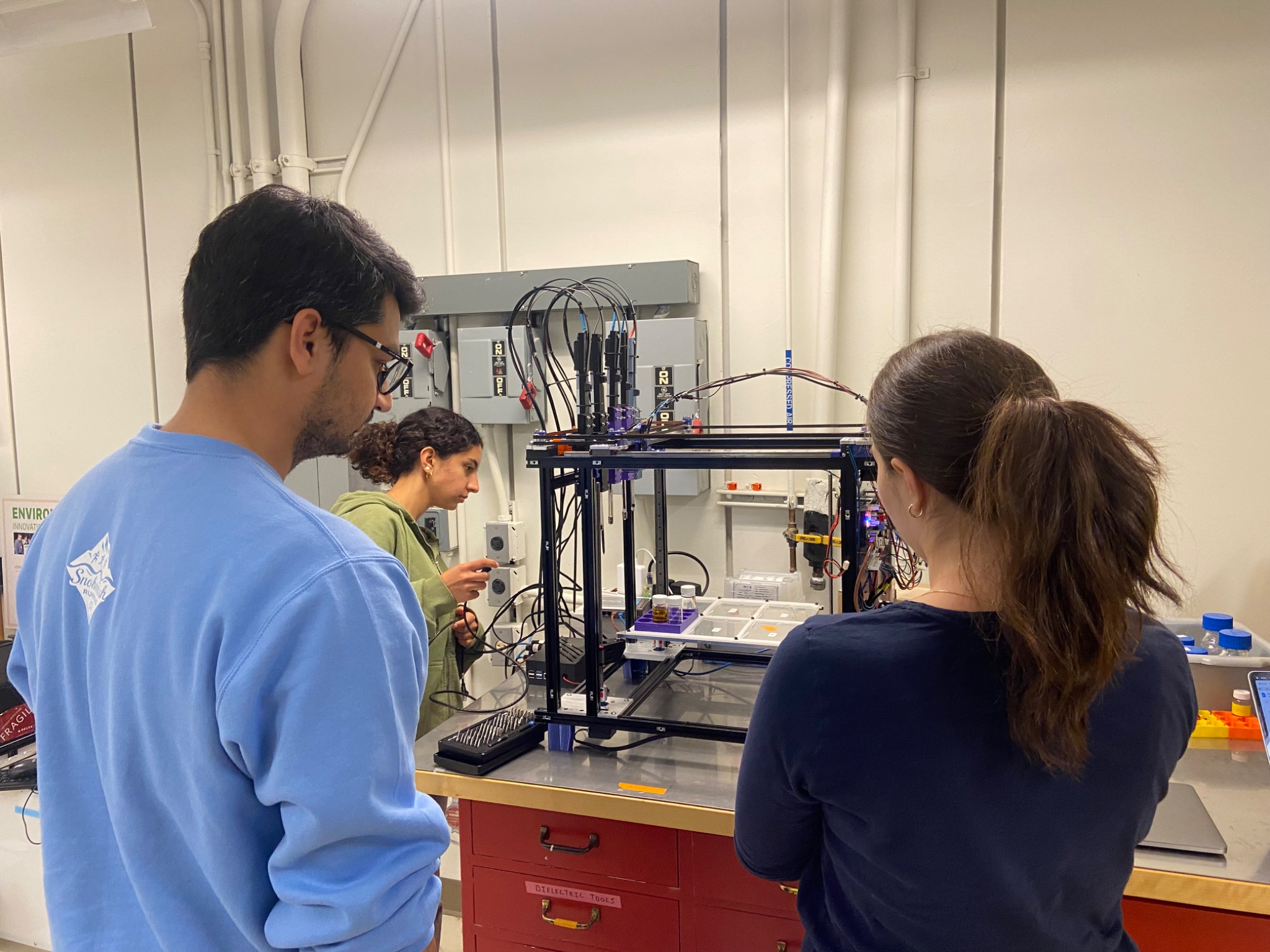
Dr. Elizabeth Nance, chair of the Chemical Engineering Department, said the ChemE Department is looking for other opportunities to modernize the curriculum and prepare students for future careers. Pozzo and Naser are among the faculty leading this work. “Professors Pozzo and Naser exemplify innovation in the classroom,” Nance said. “The SEED-AI grant is wonderful recognition of their efforts. I look forward to learning from their work in this space.” SEED-AI Grants support projects that use artificial intelligence to strengthen education at the University of Washington. SEED-AI Grants are offered through AI@UW, a center on UW campus dedicated to advancing the ethical use of AI in research, education and beyond.
Originally published May 8, 2026