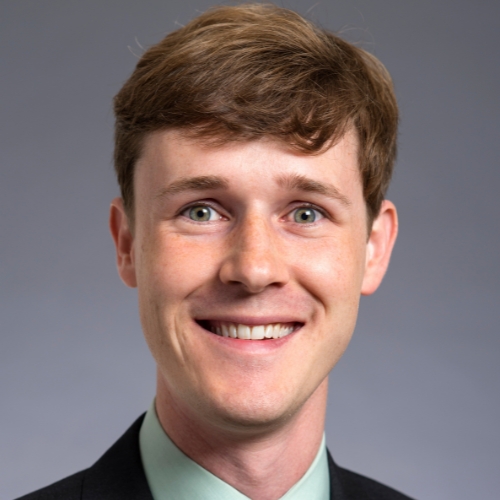
Vincent Holmberg
Assistant Professor
The University of Washington
Solvent-Based Growth, Manipulation, and Integration of Inorganic Nanomaterials with Controlled Composition and Morphology
September 25
11:00 a.m.– 12:20 p.m.
Nanoengineering and Sciences Bldg 181
Abstract
Careful control over composition, morphology, and surface chemistry are critical in virtually every materials system, and over the past few decades, we have made significant advances in developing the controlled synthesis, assembly, and integration of nanostructured materials. These efforts have played an important role in our research investigating the solvent-based growth, manipulation, and integration of inorganic nanomaterials.
This talk will highlight some of our recent contributions in inorganic nanomaterials chemistry and engineering. We will discuss efforts in the integration of nanostructured electrode materials in electrochemical systems, showing that careful control over surface chemistry helps to facilitate robust solid-electrolyte interphase layer formation, describe our work on colloidal metal chalcogenide semiconductor nanocrystals, with a focus on resonant excitations in nanoscale ternary metal chalcogenide intermediate-band semiconductors, and showcase new strategies for the growth, manipulation, and assembly of colloidal nanomaterials in solution.
Bio
Vincent Holmberg serves as an assistant professor in the chemical engineering department at the University of Washington. He received bachelor’s degrees in chemistry and chemical engineering as a Barry M. Goldwater scholar at the University of Minnesota, and earned his master’s and PhD degrees in chemical engineering as a NSF Graduate Research Fellow and a Hertz Fellow at The University of Texas at Austin, followed by a Marie Curie ETH Zürich Postdoctoral Fellowship in the Optical Materials Engineering Laboratory at the Swiss Federal Institute of Technology.
He received the 2012 Hertz Thesis Prize (1 of 39 that have been awarded nationally over the past 30 years) for his doctoral work, as well as a PhD Thesis Award from the International Society for the Advancement of Supercritical Fluids in 2014. His Nanomaterials Chemistry and Engineering course at the University of Washington was recognized by the Dean’s Office as one of the most highly rated courses in the UW College of Engineering, and he was recognized as a finalist for the University of Washington Distinguished Teaching Award in 2017.
In addition to facilitating an annual Graduate Fellowship Information Session through the UW Office of Merit Scholarships as a Fellowship Representative, he also aided the Washington Research Foundation (WRF) in the development and launch of their current WRF Postdoctoral Fellowship Program, supporting a steady state of 36 fully funded, independent postdoctoral researchers in the state of Washington. He has served continuously on the WRF Postdoctoral Fellowship Selection Committee since the program’s inception.